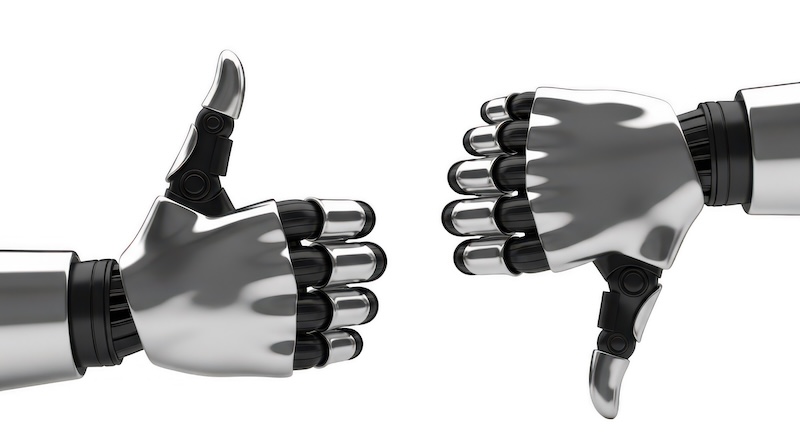
Junior lawyers in the UK are today divided over the impact of artificial intelligence on their jobs, with some fearing that they are being 'eaten' by the technology. The debate comes after a recent survey revealed that nearly a quarter of junior lawyers believe AI is having a negative impact on their work. Many are concerned that the increasing use of AI-powered tools in law firms will lead to job losses and reduced opportunities for career progression. However, others argue that AI is simply an above-average paralegal, capable of handling routine tasks but not replacing the expertise and judgment of human lawyers. Some law firms are already embracing AI, using it to automate tasks such as document review and due diligence. Others are more cautious, preferring to focus on the areas where AI is less effective, such as complex litigation and high-stakes negotiations. As the debate rages on, junior lawyers are being forced to think creatively about their futures, and how they can best work alongside AI to deliver excellent results for their clients. The Law Society has issued a statement saying that it is monitoring the situation closely, and will provide guidance to its members as necessary. In the meantime, junior lawyers are being advised to focus on developing skills that are less likely to be automated, such as communication, negotiation and problem-solving. The use of AI in law firms is set to continue, with many predicting that it will become increasingly prevalent over the coming years. As the technology improves, it is likely that the debate will only intensify, with junior lawyers continuing to grapple with the implications of AI on their careers. The future of the profession is uncertain, but one thing is clear: the role of junior lawyers is about to change forever.
Thus, the survey, which was conducted by a leading law firm, found that 22% of junior lawyers believe AI is having a negative impact on their work. The majority of respondents, however, said they were either neutral or positive about the impact of AI. The results have sparked a heated debate among law students and young lawyers, with some arguing that AI is a necessary evil, while others believe it is a threat to the profession. The debate has also raised questions about the future of legal education, with some arguing that law schools should be teaching students how to work with AI from the outset. The use of AI in law firms is not just a UK phenomenon, with many firms around the world embracing the technology. In the US, for example, AI is being used to automate tasks such as contract review and document drafting. As the use of AI becomes more widespread, it is likely that the debate will only intensify, with junior lawyers continuing to grapple with the implications of AI on their careers. The Law Society has issued a statement saying that it is monitoring the situation closely, and will provide guidance to its members as necessary. In the meantime, junior lawyers are being advised to focus on developing skills that are less likely to be automated, such as communication, negotiation and problem-solving.
In addition, the use of AI in law firms is set to continue, with many predicting that it will become increasingly prevalent over the coming years. As the technology improves, it is likely that the debate will only intensify, with junior lawyers continuing to grapple with the implications of AI on their careers. The future of the profession is uncertain, but one thing is clear: the role of junior lawyers is about to change forever. The use of AI will not just change the way law firms work, but also the way that lawyers work with clients. With AI handling routine tasks, lawyers will be free to focus on the more complex and high-value work. This could lead to a more efficient and cost-effective service for clients, but it also raises questions about the role of lawyers in the future. The debate is likely to continue for some time, with junior lawyers and law firms continuing to grapple with the implications of AI. In the meantime, it is clear that the use of AI is here to stay, and junior lawyers will need to adapt quickly if they are to remain relevant in the profession.
The debate about the impact of AI on junior lawyers is not just a UK phenomenon, but a global issue. The use of AI in law firms is becoming increasingly widespread, with many firms around the world embracing the technology. In the US, for example, AI is being used to automate tasks such as contract review and document drafting. The use of AI is not just limited to law firms, but is also being used by lawyers in private practice. With the increasing use of AI, it is likely that the debate will only intensify, with junior lawyers continuing to grapple with the implications of AI on their careers. The future of the profession is uncertain, but one thing is clear: the role of junior lawyers is about to change forever.
Discussion
No comments yet
Be the first to share your thoughts.
Join the discussion